We compared manufacturer specs, manuals and warranty terms. We have not hands-on tested these products yet. How we research
We may earn a commission when you buy through links on this page. As an Amazon Associate I earn from qualifying purchases. How we make money
Cleaning grates takes a minute after preheating, but the tool matters. The CDC has reported injuries from wire bristles that broke off brushes and ended up in grilled food, so the first decision is wire or bristle-free. After that, match the tool to your grate material and pick a handle that keeps your hand off the heat. In the CDC's 2012 report, two of the six patients needed emergency abdominal surgery (CDC MMWR).
We compared 4 grill brushes and picked 4.
Our picks at a glance
1
Best overallGrill Rescue Bristle-Free BrushDip the heat-resistant head in water and scrub a hot grate: the steam does the work and there are no wire bristles to break off.
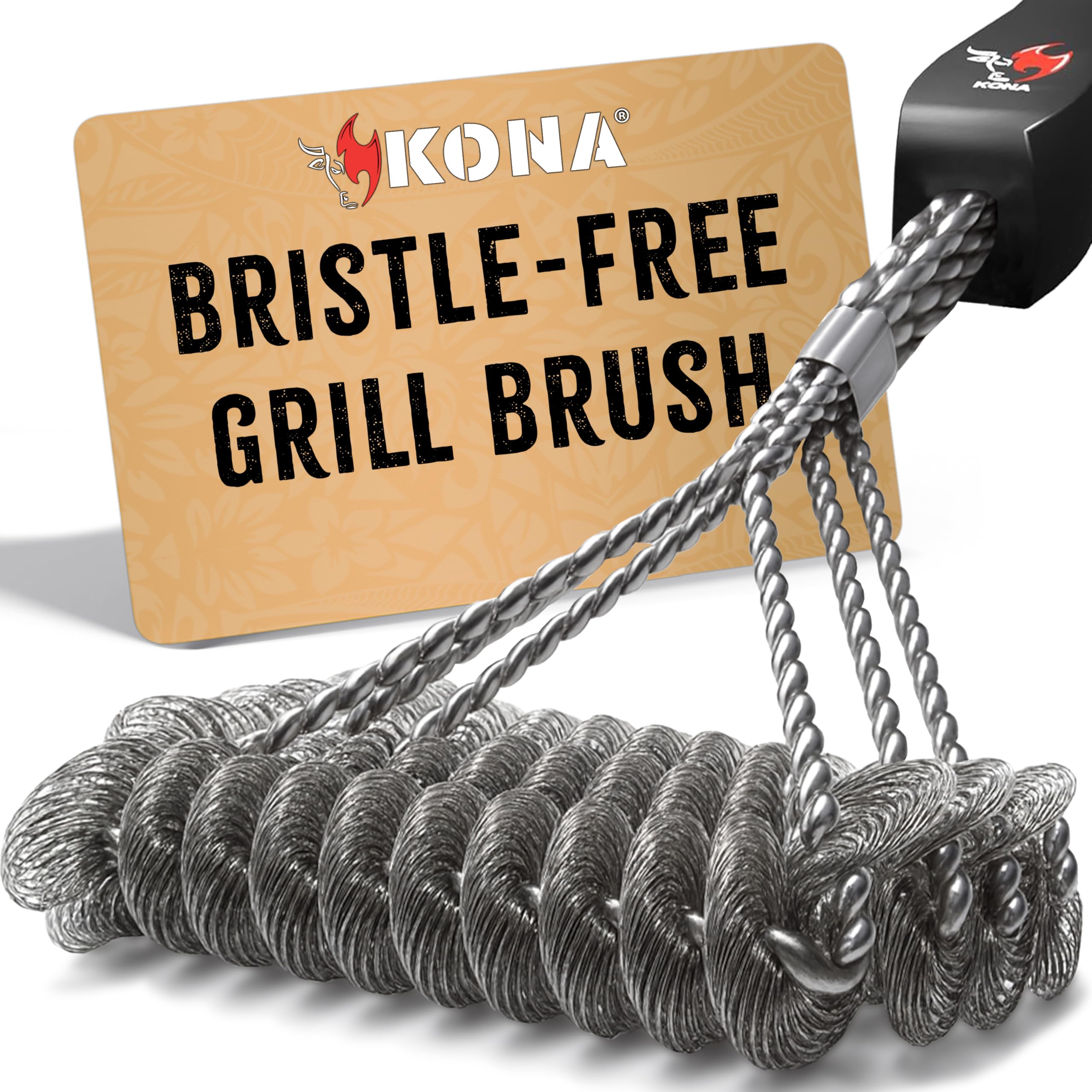
Best budgetGRILLART Bristle-Free Brush 18"Coiled stainless helixes instead of loose bristles, on an 18-inch handle that keeps your hand away from the heat.
Settle wire versus bristle-free first, then match the tool to your grates. Then check handle length and whether the head can be replaced. Our grill cleaning guide turns the choice into a routine.
Bristle-free or wire
CDC's 2012 report described six patients at one Rhode Island hospital system who swallowed wire bristles that had stuck in grilled food; injuries ranged from neck punctures to bowel perforation (CDC MMWR). The CDC advises inspecting the grill surface for loose bristles before cooking and considering other cleaning methods. Coil, mesh-pad and scraper designs avoid loose wires altogether. All six patients recovered, and the CDC asks that injuries be reported to CPSC (CDC MMWR).
Grate compatibility
Check what grates the maker says the tool is for. Porcelain-coated grates scratch more easily; cast iron tolerates harder scraping; some scrapers are cut to fit a specific grate profile. Match the tool to the grate before you match it to anything else, and read the care instructions for both the brush and the grill, since some makers limit what you may use on a coated surface.
Handle length
Weber's routine is to preheat on high for 10 to 15 minutes, then brush the hot grates (Weber). That means working over a hot grill, so compare handle lengths in the table. Weber also says grates don't need washing between sessions because preheating cleans them (Weber), so the brush is the tool your hand spends the most time with, and its length is what keeps you clear of the heat.
Head durability and replaceable heads
Replaceable heads let you swap a worn head without replacing the whole tool. Inspect any brush regularly and replace it when it shows wear. Look at the head after each cook and again before the next one; the CDC advises examining the grill surface for loose bristles before cooking (CDC MMWR).
Scraper edge
Many tools combine a scraper edge with a brush or pad. Wooden scrapers wear into the shape of your grates over time; metal scrapers cut harder deposits. Pair either with a regular check of the grease tray, covered in our grill cleaning guide. Weber's advice for the grease tray is to remove excess grease and replace a disposable drip pan that is overflowing (Weber).
Tips for using your grill brush
Brush after preheating, while the grates are hot (Weber).
Before every cook, look over the grates for loose bristles, whatever tool you use (CDC MMWR).
Empty the grease tray too: NFPA lists grease buildup as a fire risk (NFPA via ANSI).
Preheat on high for 10 to 15 minutes first, which burns off residue before you brush (Weber).
Report any injury from a grill-cleaning brush to CPSC, as the CDC advises (CDC MMWR).
FAQ
Are wire grill brushes dangerous?
They can be. A CDC report covered six patients at one Rhode Island hospital system between March 2011 and June 2012 who swallowed wire bristles that had stuck to grilled food, with injuries from neck punctures to bowel perforation that needed surgery (CDC MMWR).
How can I avoid bristle injuries?
Look over the grill surface for loose bristles before every cook, and think about a different cleaning method, as the CDC suggests (CDC MMWR).
When should I brush the grates?
Preheat the grill on high for 10 to 15 minutes, per Weber, then brush the grates while they are still hot (Weber).
Should I clean the grease tray too?
Yes. Grease and fat left on grills and trays is a fire hazard, and cleaning it out is on NFPA's list of prevention tips (NFPA via ANSI).